
Pressure Reducing Valve Manufacturer in China
We provide stable and reliable pressure-reducing valve solutions for industrial pipelines, helping you reduce high inlet pressures to the desired outlet pressure and maintain stable downstream pressure within the specified operating conditions.
We select the appropriate valve design, materials, and pressure-reducing configuration based on the specific medium, inlet pressure, target outlet pressure, flow rate, and temperature requirements.
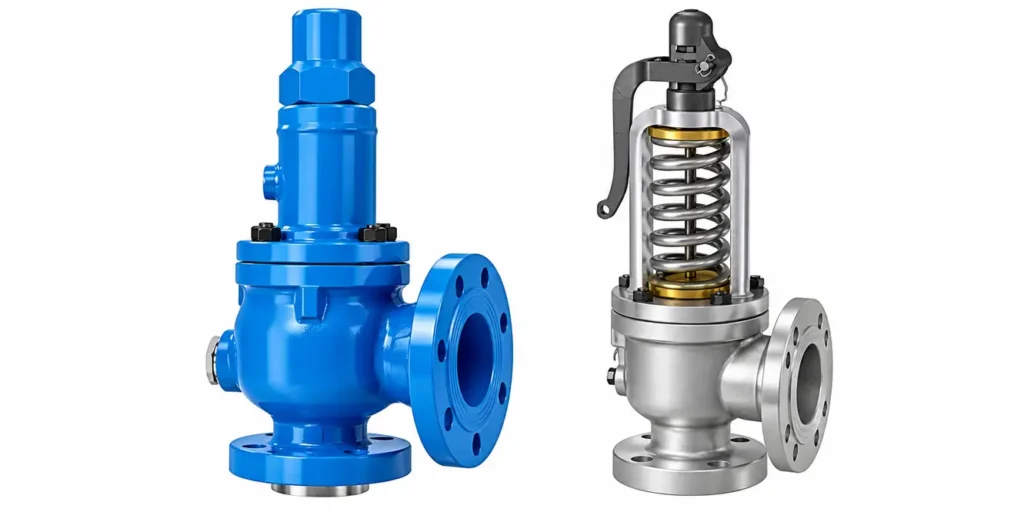
Pressure Reducing Valve Types
Different media, pressure fluctuations, and flow requirements place varying demands on the structure and internal components of pressure-reducing valves. We recommend selecting an appropriate pressure-reducing valve configuration based on the actual inlet pressure, target outlet pressure, temperature, and flow conditions.
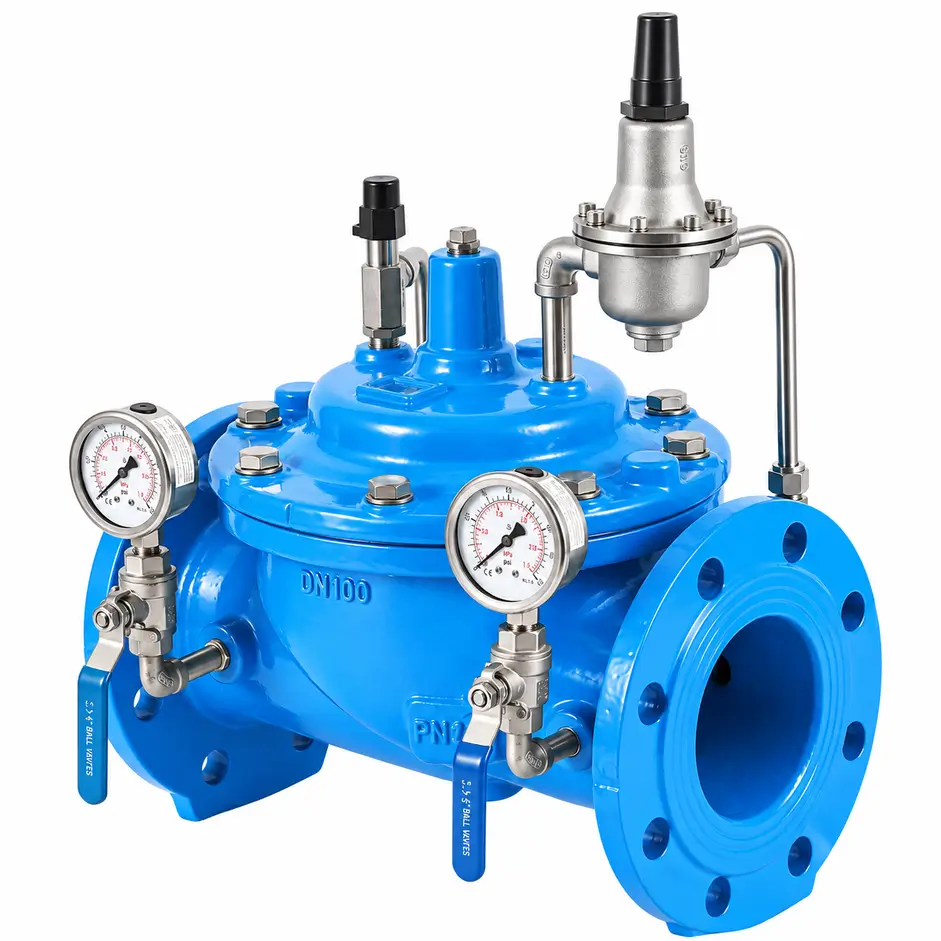
Diaphragm Pressure Reducing Valve
By detecting changes in pressure via a diaphragm and actuating the internal mechanism of the valve to adjust its opening, the outlet pressure is regulated.
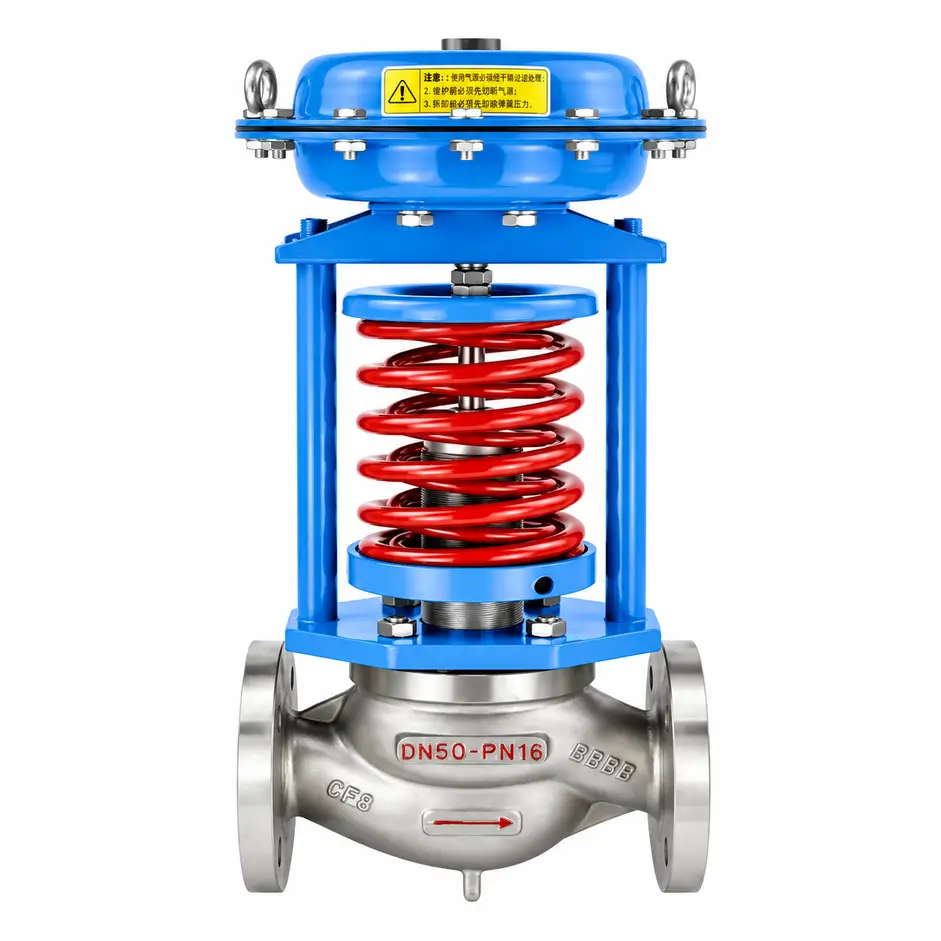
Spring Diaphragm Pressure Reducing Valve
By balancing the force applied by the spring with the outlet pressure sensed by the diaphragm, the valve is adjusted to control pressure reduction.
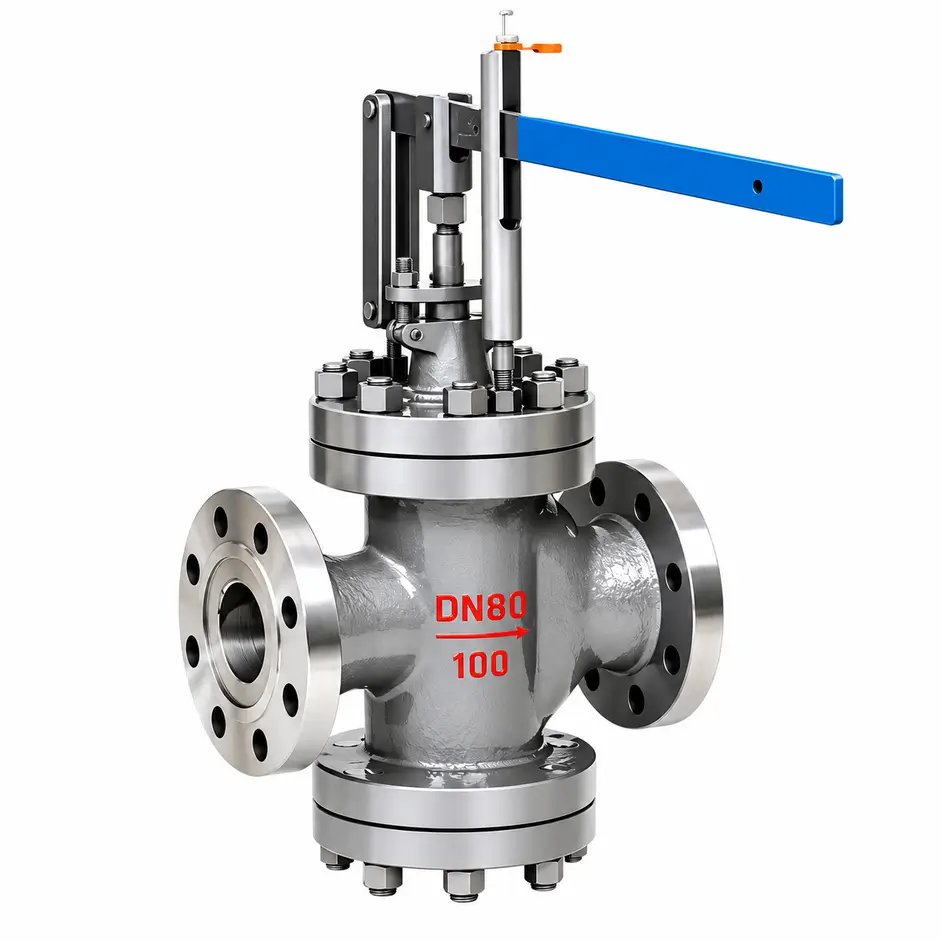
Lever-Type Pressure Reducing Valve
Pressure forces are transmitted and balanced through a lever mechanism to achieve pressure reduction and regulation in the valve.
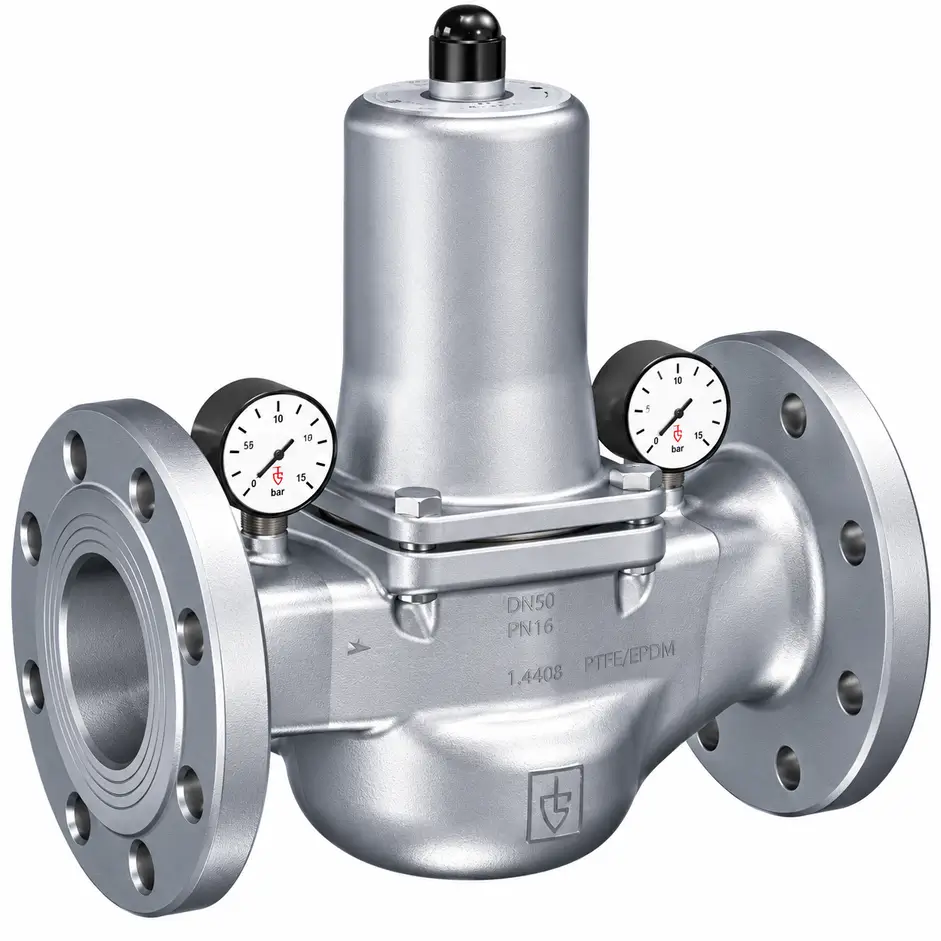
Bellows Pressure Reducing Valve
The bellows are used to generate a mechanical response to pressure changes, thereby driving the valve's actuator.
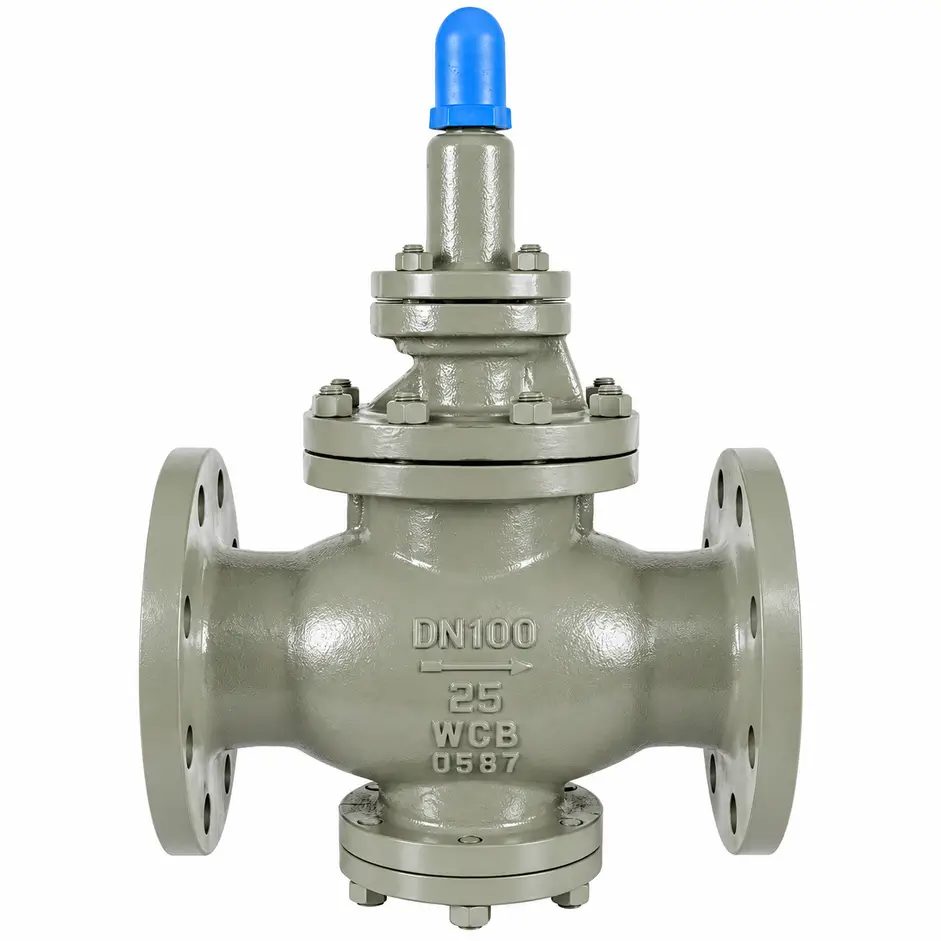
Piston Pressure Reducing Valve
The piston detects changes in pressure and drives the control mechanism to regulate the downstream pressure.
What Information Do We Need for Your Pressure Reducing Valve Order?
To help you select the right pressure relief valve, please provide the following basic operating conditions. Even if you are not yet sure of the specific model, you can still send us the parameters you have available, and we will verify the product configuration based on your actual application.
| Required Information | What You Need to Provide | Example / Description |
|---|---|---|
| Working Medium | What fluid will pass through the valve? | Water, steam, compressed air or other media |
| Inlet Pressure | Minimum, normal and maximum inlet pressure | Specify the pressure unit, such as bar or MPa |
| Required Outlet Pressure | Your target downstream pressure | The pressure required by your equipment or pipeline |
| Flow Rate | Minimum, normal and maximum flow, if available | Specify the applicable flow unit |
| Operating Temperature | Normal and maximum operating temperature | °C |
| Valve Size | Required pipeline or connection size | DN or other connection dimensions |
| Connection Type | Preferred connection method | Flanged, threaded or according to your drawing |
| Material Requirements | Any specific material requirements | Based on medium and operating conditions |
| Order Quantity | Estimated purchasing quantity | Required quantity for quotation |
| Drawings / Datasheet | Existing drawings or technical specifications | Optional, if available |
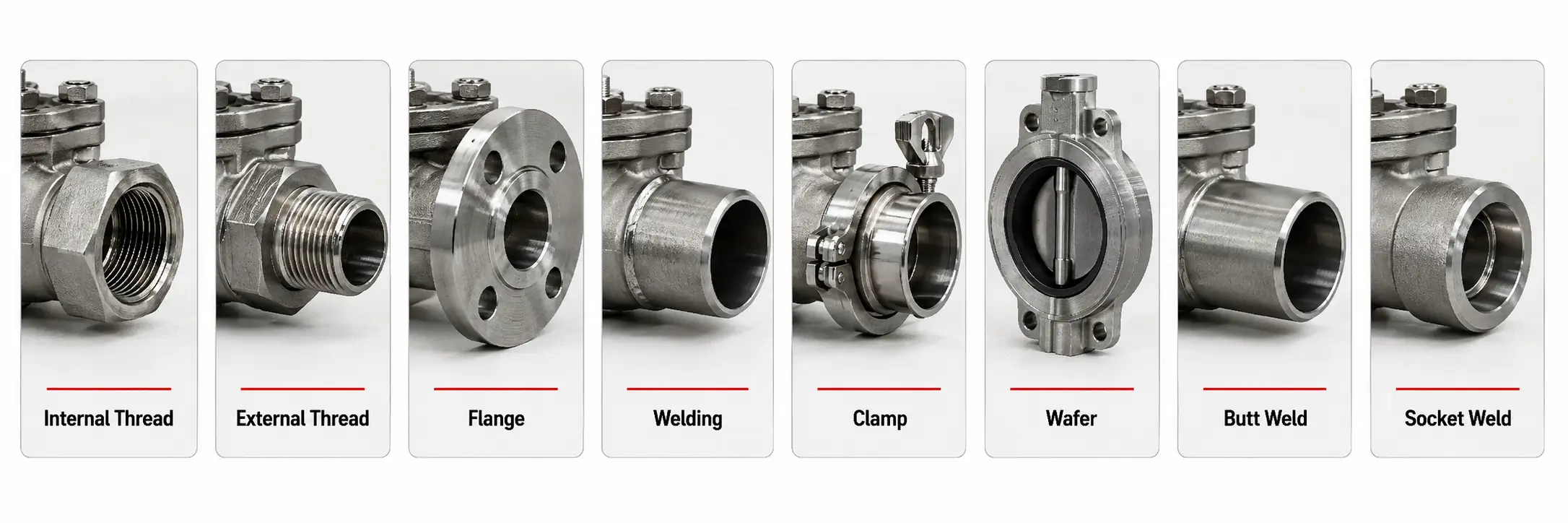
Various Connection Types
In industrial projects, check valves must comply with the corresponding connection methods and installation requirements.
Pressure Reducing Valve Applications
Pressure-reducing valves are used to reduce high inlet pressure to the pressure required by downstream equipment or piping, and to maintain a stable supply of pressure within the specified flow rate and inlet pressure ranges.
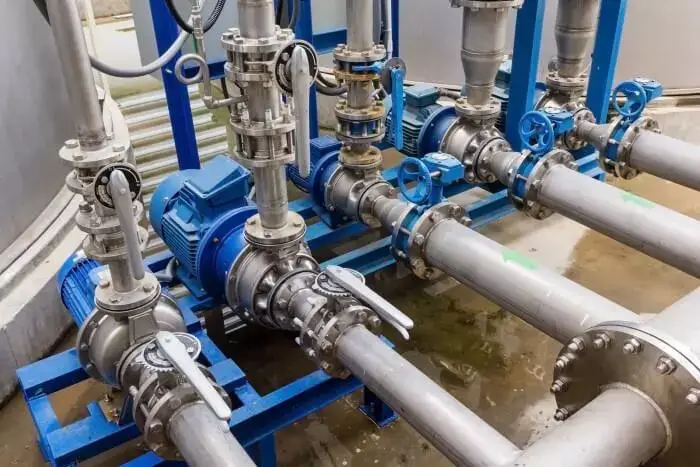
Water Supply and Distribution
In a water supply system, pipes and end-use equipment in different areas may require different water supply pressures. Pressure-reducing valves can be installed at appropriate locations to regulate high upstream water supply pressure to the required range downstream.
For example, different floors of a building or industrial water supply branches may have varying pressure requirements, so the same outlet pressure setting cannot be applied across the board.
Key selection criteria: variations in inlet pressure, peak and low-flow requirements, target outlet pressure, water quality, and valve nominal diameter.
Steam Distribution Systems
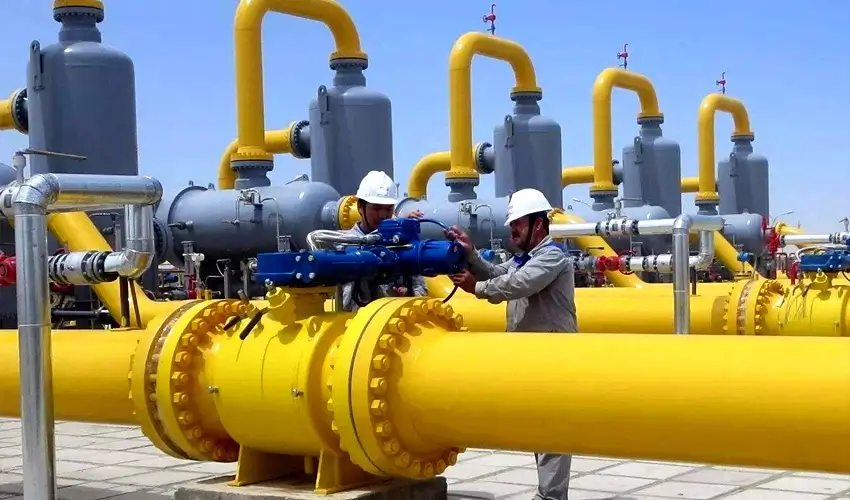
The pressure in the main steam line may exceed the pressure required by downstream heat exchangers or process equipment; therefore, steam supply pressure must be regulated using a pressure-reducing device suitable for steam applications.
When selecting a device, it is necessary not only to confirm the pressure but also to consider the steam temperature, dryness, actual steam consumption, and load variations during operation.
Key selection criteria: inlet and outlet pressures, steam flow rate, temperature, pressure differential, and condensate management.
Compressed Air Systems
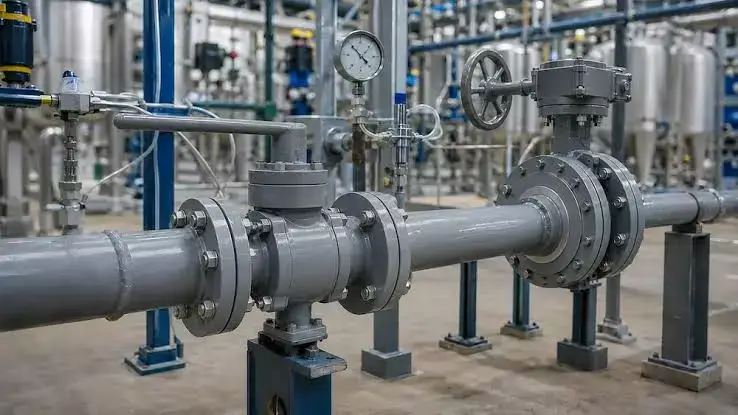
A factory’s compressed air main distribution network must supply air to various pieces of equipment, but the actual operating pressures required by each piece of equipment are not exactly the same.
In applications where air pressure regulation is required, pressure-reducing valves help lower the supply pressure so that downstream equipment can achieve the required operating pressure, thereby avoiding the need to rely solely on increasing the main distribution network’s pressure to meet local air demand.
Key selection criteria: maximum and minimum air consumption, inlet pressure fluctuations, outlet pressure requirements, air purity, and pressure regulation response.
HVAC and Building Services
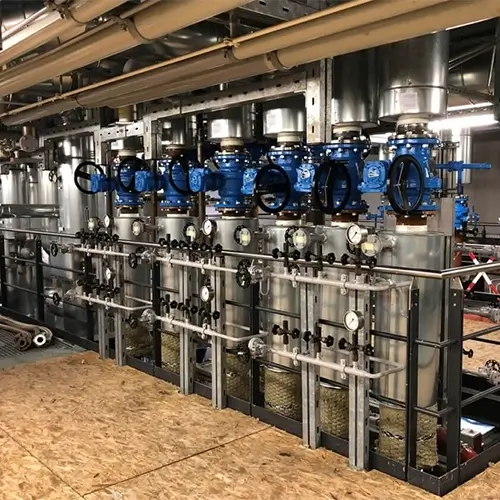
In building water supply and HVAC utility systems, different areas and equipment may have varying pressure requirements.
Appropriate pressure-reducing valves can be used in systems where downstream water supply pressure needs to be controlled, helping to prevent upstream pressure from directly affecting piping and equipment with lower pressure requirements.
It is important to note that pressure-reducing valves cannot replace expansion volume management or independent overpressure protection in closed-loop systems.
Key Selection Criteria: System configuration, design flow rate, static pressure variation, equipment pressure rating, and installation space.

Looking for the Right Valve?
Tell us your medium, pressure, temperature, valve size or application. Our team will help you find a suitable valve solution and provide a quotation.
Frequently Asked Questions
1. What Is a Pressure Reducing Valve?
A pressure-reducing valve is an automatic regulating valve used to control downstream pressure. By adjusting the opening of the internal valve spool, it reduces high inlet pressure to the desired outlet pressure and maintains the downstream pressure within the specified operating range.
When your equipment cannot directly withstand the higher pressure supplied by the main pipeline, you can install a suitable pressure-reducing valve upstream of the equipment to provide the required supply pressure downstream.
It is important to note that a pressure-reducing valve is not a safety relief device and cannot replace an isolation valve in the pipeline.
2. How Does a Pressure Reducing Valve Work?
A pressure-reducing valve controls the valve opening by balancing the force between the outlet pressure feedback and the internal regulating mechanism.
When the downstream pressure falls below the set point, the regulating mechanism increases the valve opening in accordance with the valve’s design; when the downstream pressure rises, it decreases the opening, thereby maintaining the target outlet pressure within the design operating range.
You can think of it as a valve that automatically adjusts its opening in response to changes in downstream pressure, rather than simply restricting the flow path in the pipeline.
3. What Is the Difference Between a Pressure Reducing Valve and a Pressure Relief Valve?
| Comparison | Pressure Reducing Valve | Pressure Relief Valve |
|---|---|---|
| Main Function | Controls downstream pressure | Provides overpressure protection |
| Normal Operation | Continuously adjusts valve opening | Normally remains closed |
| Pressure Reference | Primarily responds to downstream pressure | Responds to pressure in the protected system |
| Typical Application | Equipment pressure regulation and pipeline pressure reduction | Overpressure protection for pressure vessels, equipment and pipelines |
A pressure reducing valve regulates downstream pressure, while a pressure relief valve protects a system against overpressure. They serve different purposes and should not be used interchangeably.
4. How Do I Determine the Correct Pressure Reducing Valve Size?
The size of a pressure-reducing valve should be determined based on the actual flow rate, inlet pressure, target outlet pressure, and medium characteristics, rather than simply copying the dimensions of the main pipeline.
If the valve is oversized, it may remain partially closed for extended periods at low flow rates, affecting control stability; if it is undersized, it may fail to meet maximum flow requirements, resulting in insufficient outlet pressure.
Therefore, it is recommended to provide the minimum, normal, and maximum flow rates, rather than submitting only a single design flow rate.
5. What Should Be Considered During Pressure Reducing Valve Installation?
Before installation, you should first verify the medium flow direction and permitted installation orientation marked on the valve body, as well as whether there is sufficient maintenance space upstream and downstream of the valve.
In engineering applications, it is also typically necessary to consider, based on the system conditions, inlet filtration, upstream and downstream pressure monitoring, isolation for maintenance, and necessary downstream overpressure protection.
It is especially important to note that a pressure-reducing valve alone should not be regarded as the sole protective measure ensuring the safety of downstream equipment. If its failure could lead to downstream overpressure, independent protective devices should be installed in accordance with relevant equipment specifications.